2.1 KiB
🩺 Knowledge Debt — TriliumNext Plugin
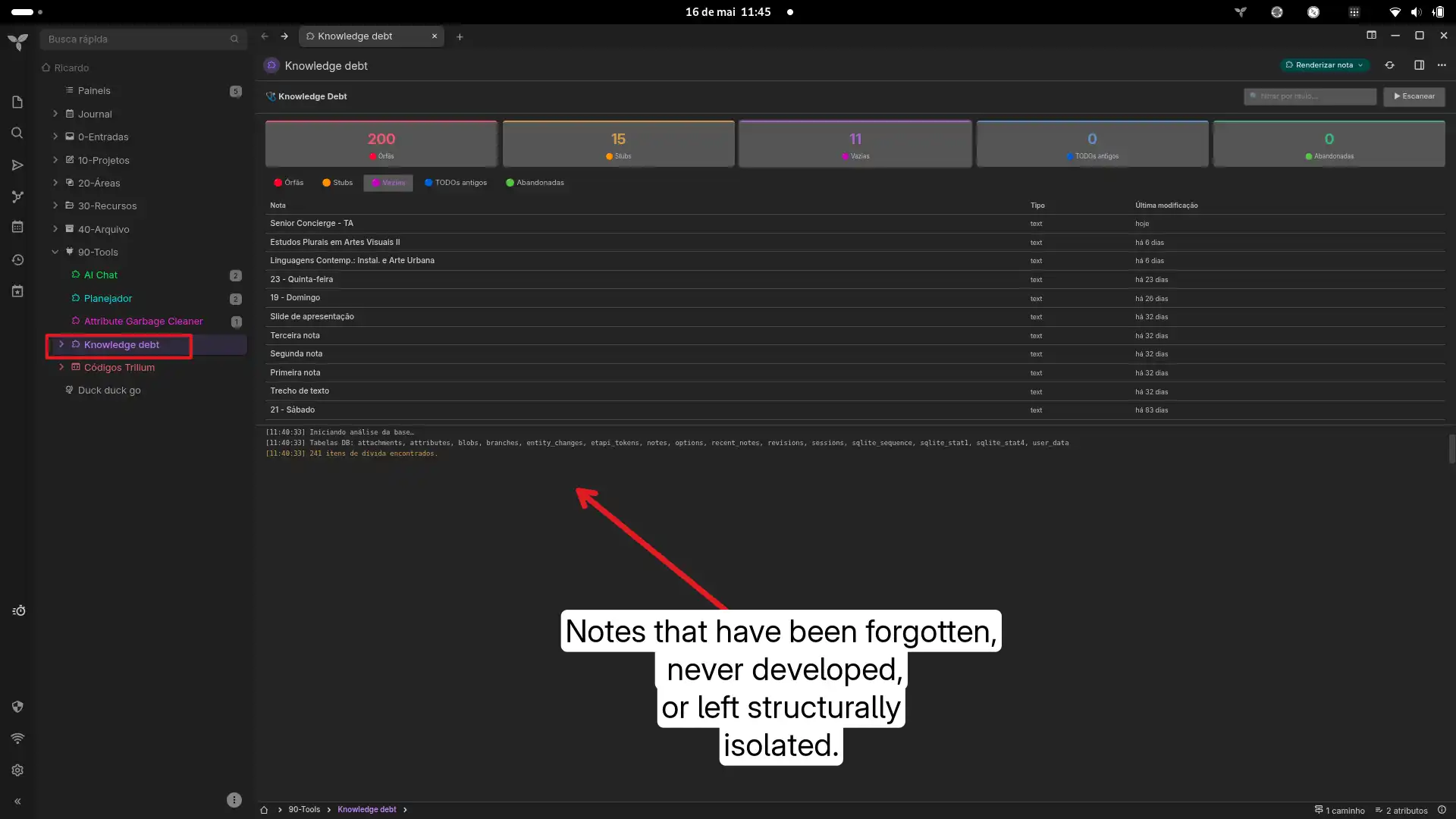
A Render Note dashboard that audits the health of your knowledge base, surfacing notes that have been forgotten, never developed, or left structurally isolated.
What it detects
| Category | Criteria |
|---|---|
| 🔴 Orphans | No other note links to them (no backlinks) |
| 🟠 Stubs | Text content between 1–250 characters, no children |
| 🟣 Empty | Null or blank content, no children (containers excluded) |
| 🔵 Old TODOs | Has a #todo-style label, unmodified for > 30 days |
| 🟢 Abandoned | No children, unmodified for > 90 days |
Collection notes and any note acting as a container (i.e. notes with children) are automatically excluded from Stubs and Empty to avoid false positives.
Installation
- Create a new JS Frontend note and paste the contents of
knowledge-debt.js - Create a second note (any type) — this will be your dashboard page
- On the dashboard note, add the relation attribute:
~renderNote = <your JS note> - Open the dashboard note and click ▶ Escanear
Compatibility
Tested on TriliumNext (post-Trilium fork). The plugin auto-detects the internal links table name across different versions (note_links, links, etc.) and falls back gracefully to relation attributes if no links table is found. All available tables are logged after each scan for debugging.
Thresholds
All thresholds are defined directly in the SQL queries and easy to adjust:
// Stubs: notes shorter than this (in raw HTML characters) are flagged
LENGTH(b.content) BETWEEN 1 AND 250

// Old TODOs: flagged after this many days without modification
julianday('now') - julianday(n.dateModified) > 30

// Abandoned: flagged after this many days without modification
julianday('now') - julianday(n.dateModified) > 90
Credits
Inspired by the attribute-gc plugin pattern. Built as a companion tool for PKM maintenance workflows in TriliumNext.
Licensed under MIT.
Screenshot